Description
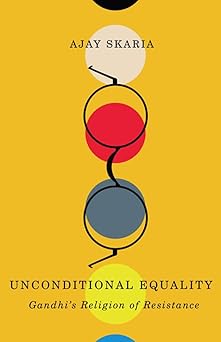
Unconditional Equality examines Mahatma Gandhi’s critique of liberal ideas of freedom and equality and his own practice of a freedom and equality organized around religion. It reconceives satyagraha (passive resistance) as a politics that strives for the absolute equality of all beings. Liberal traditions usually affirm an abstract equality centered on some form of autonomy, the Kantian term for the everyday sovereignty that rational beings exercise by granting themselves universal law. But for Gandhi, such equality is an “equality of sword”―profoundly violent not only because it excludes those presumed to lack reason (such as animals or the colonized) but also because those included lose the power to love (which requires the surrender of autonomy or, more broadly, sovereignty).
Reviews
There are no reviews yet.